

How to exploit the value gap between the S&P 500 and everything else in the market
Eric Rosenbaum | CNBC | August 21st, 2026
The stock market is still doing great. Despite the anxiety among investors that the bull market has to end, and all the headwinds that can be pointed to that may cause a correction if not a bear market, 10 out of 11 sectors in the S&P 500 just beat earnings estimates.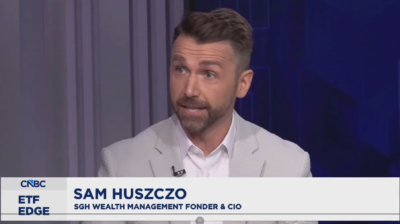
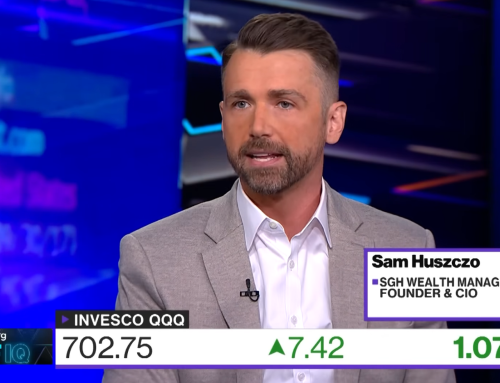
That stat is among the reasons that Sam Huszczo, founder of SGH Wealth Management, is still in the bullish camp. Even the volatility in memory stocks and semiconductors this year isn’t keeping him from holding an optimistic view of the short-term market outlook. “Semiconductor stocks have revenue projections of 64% growth over the next year,” he said on this week’s “ETF Edge.”
“I’m optimistic for the next 12-18 months,” he added.
To be sure, the amount of money the hyperscalers are spending on data centers — and no longer spending on stock buybacks that help to prop up earnings — is a big change for the market and investors. It’s close to 40% of their revenue, according to Huszczo, and he said there is currently no guarantee the return on investment from AI ever arrives. That is why his most recent trade was into an equal-weight stock market fund, but he described it as “a place to have a cup of coffee,” in the current market as opposed to what he would consider a long-term investment.
Equal weight strategies are outperforming the market-weighted S&P 500. In the current moment, Huszczo says it is an approach that is a “little bit better on the risk dynamics” but still has exposure to the hyperscalers in the event that the “baton” should pass back to them. But his approach isn’t to make a single bet on which approach wins. At the same time that he has added an equal-weight allocation, he is investing in momentum stocks, and it is that “together” approach, he said, which will create a better winning formula. “No one strategy is going to be a silver bullet,” Huszczo said. The way he thinks about it is that his momentum trade is a way to get exposure to the future winners while his equal-weight trade is “trying to get out of yesterday’s winners.”
This index fund investing approach creates an uncorrelated portfolio (with momentum and equal weight having a negative 5.2% correlation, according to Huszczo). That means that no matter what happens in the broader market, “one is going to outperform the other,” he said. “We’re trying to get ahead of that, the second and third trade into the future,” he added. “Equal weight and dispersion of everything else will continue to be the trade.”

Keep In Touch